
Every week somewhere in America, a company moves into a beautiful new office and discovers (on Monday morning, with the whole staff watching) that the internet won't be live for three more weeks. The furniture made it. The network didn't.
Office moves fail in predictable ways. Here's the checklist that prevents them, in the order the clock actually runs.
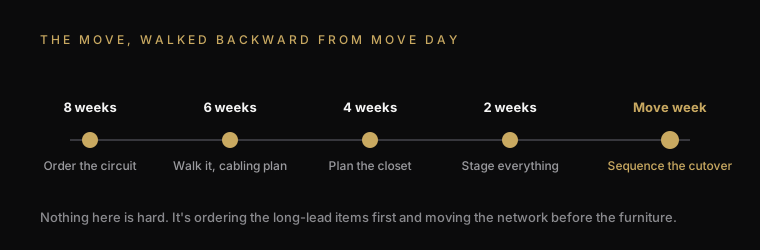
8 weeks out: order the circuit
Internet circuits have the longest lead time of anything in your move: 30 to 90 business days for a new fiber installation, longer if construction is required. This is the single most common move-killer. Call your ISP (and a competitor, moves are leverage for better pricing) the day the lease is signed.
While you're at it: ask the landlord what carriers already serve the building. "Lit" buildings turn up in days; unlit ones wait on construction crews.
6 weeks out: walk the space with a cabling plan
Before drywall closes or after-hours access gets complicated, decide where people, printers, access points, cameras, and TVs actually go. Every workstation needs drops; every conference room needs more than you think. If the space is under construction, coordinate now. Pulling cable through open ceiling costs a fraction of doing it after move-in.
Ask the previous tenant's question too: what's already in the walls? Existing cabling is only an asset if it's documented and tests clean. An hour of certification testing tells you whether you inherited infrastructure or landfill.
4 weeks out: plan the closet, not just the desks
The network closet (or the corner that will pretend to be one) needs power, cooling, a rack, and a locking door. Decide what moves and what gets replaced. A move is the natural upgrade point for the switch that's been blinking amber since 2019. Order hardware now; enterprise gear still has lead times.
2 weeks out: stage everything you can
Configure switches, firewall, and Wi-Fi before the move. A staged network comes up in hours; one configured live in the new space comes up in days, with an audience. Confirm the circuit activation date in writing and schedule the cutover, ideally circuit live a full week before people arrive.
Move week: sequence, don't scramble
Circuit first, core network second, Wi-Fi third, then desks. Test every workstation drop before its human arrives. Keep the old office's service alive through the first week if you can. It's the cheapest insurance you'll ever buy.
The pattern behind every smooth move
Notice what this list really is: lead times, walked in reverse. Nothing here is technically hard. It's ordering the long-lead items first and refusing to let "we'll figure out the network later" survive the kickoff meeting. Move the network first, and the move takes care of itself.
Loading comments…