
Network core and segmentation
Who talks to whom, decided on purposeSwitching, routing, VLANs, address plans, security policy, uplinks, PoE, management access, configuration backups, and recovery, designed together.
What Network core and segmentation includes
Switching moves frames within network segments; routing moves traffic between networks; security policy controls allowed paths. VLANs create logical separation but are not a complete security control without correctly enforced routing, filtering, identity and management boundaries.
Core design starts with applications, users, devices, data flows and consequences. Hardware throughput matters, but so do port media, uplinks, power budgets, configuration ownership, observability and a recoverable change process.
Question to answer before designWhich systems need to communicate, which must remain separated, and what must keep working when a device, link, or provider fails?
This service may fit when:
- Guest, camera, user and operational devices share one flat network
- Core equipment is at port or throughput limits
- Network diagrams do not match current configuration
- A failure or change affects more systems than expected
What the system includes
A complete scope covers each part below and the connections between them.
Edge networks
Users, guests, cameras, voice, servers, IoT and OT zones
Access switching
Ports, PoE, VLAN assignment and local uplinks
Core/routing
Inter-zone paths, upstream routing and failure domains
Policy/management
Filtering, identity, logging, administration and recovery access
How site information becomes a tested project
A complete project record connects the conditions found on site, the design decisions made from them, and the tests and closeout documents delivered afterward.
What we confirm before design
- Device, user, application and data-flow inventory
- Provider, WAN, server and cloud dependencies
- Port, media, PoE and throughput demand
What those findings determine
- Segmentation: Start with data flows and consequence, then define enforcement.
- Core topology: Compare downtime consequence with upstream shared dependencies.
- Uplinks: Use actual traffic, oversubscription and failure behavior.
What you should receive
- Physical and logical network diagrams
- Addressing, VLAN and policy matrix
- Port/uplink and capacity schedule
The exact inputs, decisions, and acceptance records depend on the site and signed scope.
Project stagesSurvey through closeoutView details
How the work moves from survey to closeout
Each stage should produce the records and test results needed before the next stage begins.
- 01
Discover flows
Inventory users, devices, services, providers, management paths and required communications.
EvidenceAsset/data-flow map and dependency register - 02
Design zones and capacity
Define subnets, VLANs, routing, policies, uplinks, failure domains and management access.
EvidenceLogical design, addressing plan and policy matrix - 03
Stage and change
Build configurations, validate dependencies and execute within a controlled migration window.
EvidenceReviewed configuration, change log and rollback checkpoint - 04
Validate and hand off
Test allowed/denied paths, performance, failover where scoped and management recovery.
EvidenceTest matrix, configuration backup and final diagrams
Design choicesCompare the available approachesView details
How to choose the right approach
The right choice depends on the site, application, operating risk, and acceptance requirements. More equipment does not automatically improve the system.
What we need to know
- Device, user, application and data-flow inventory
- Provider, WAN, server and cloud dependencies
- Port, media, PoE and throughput demand
- Security zones and permitted communications
- Availability, maintenance and recovery requirements
What you should receive
- Physical and logical network diagrams
- Addressing, VLAN and policy matrix
- Port/uplink and capacity schedule
- Validated configuration backup
- Allowed/denied path and failover test record
Equipment examplesSee relevant hardwareView details
Hardware that may be part of the project
These examples are not a final bill of materials. We confirm compatibility, availability, and the exact model after the requirements are clear.
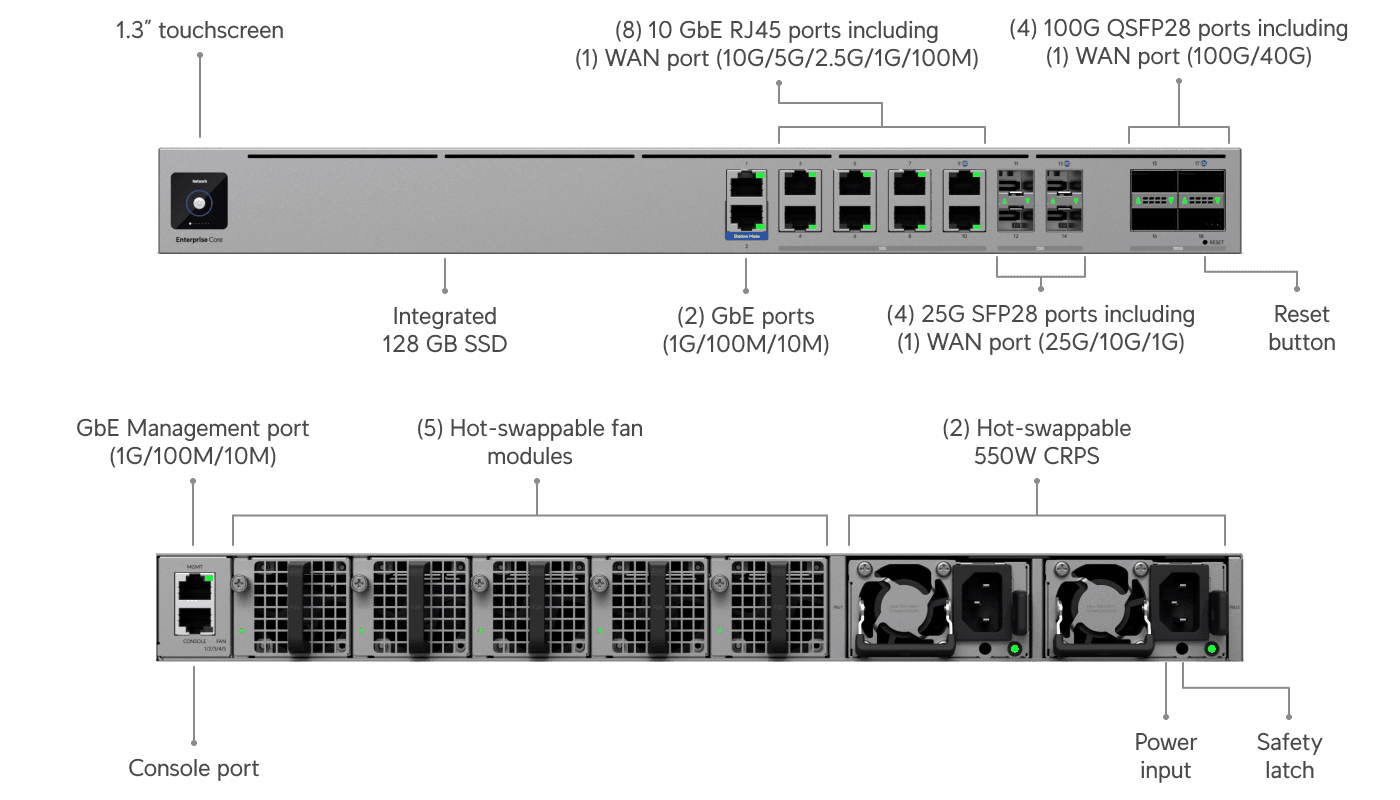
EF-Core
100 Gbps gateway, 79 Gbps IDS/IPS, 22,500+ clients, 5,000+ IPsec tunnels
Equipment planning price $5,475 ↗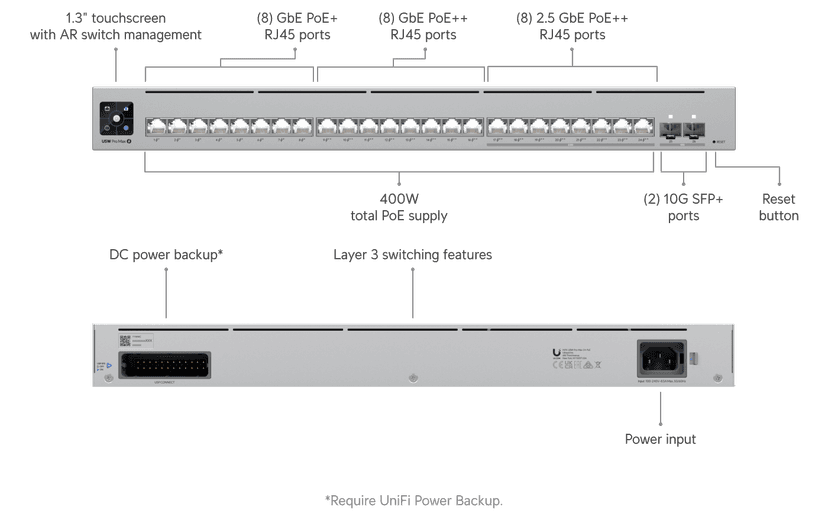
USW-Pro-Max-24-PoE
24-port Layer 3 switch, high-power PoE++ output
Equipment planning price $1,175 ↗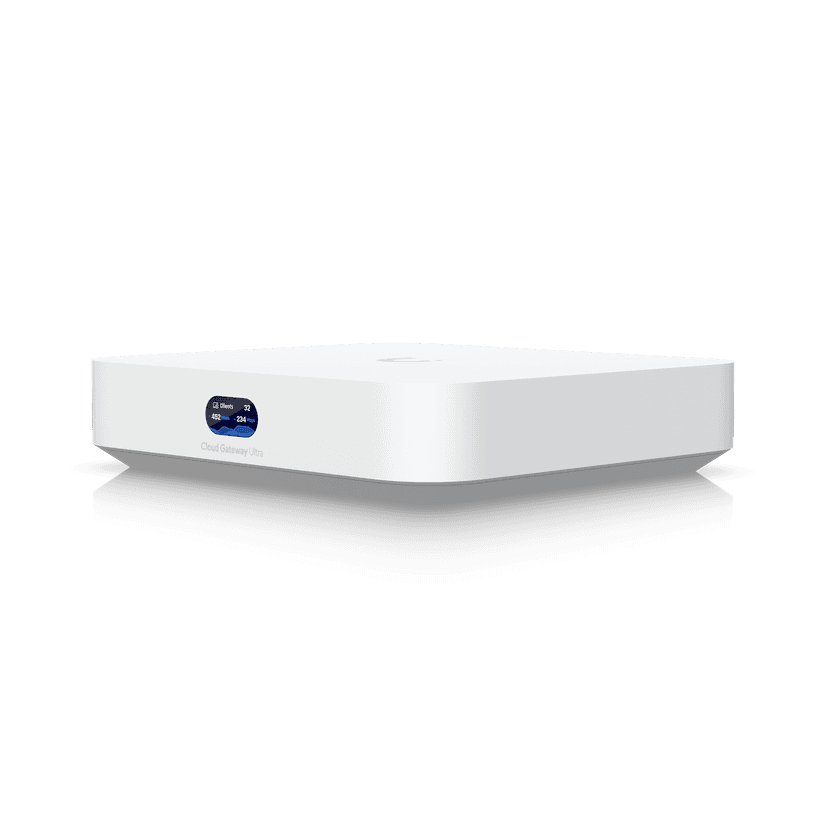
UCG-Ultra
Router, firewall & UniFi controller for 30+ devices / 300+ clients, 1 Gbps IPS routing
Equipment planning price $190 ↗
UCG-Max
2.5G gateway & controller, 30+ devices / 300+ clients, 2.3 Gbps IPS routing, built-in NVR bay
Equipment planning price $440 ↗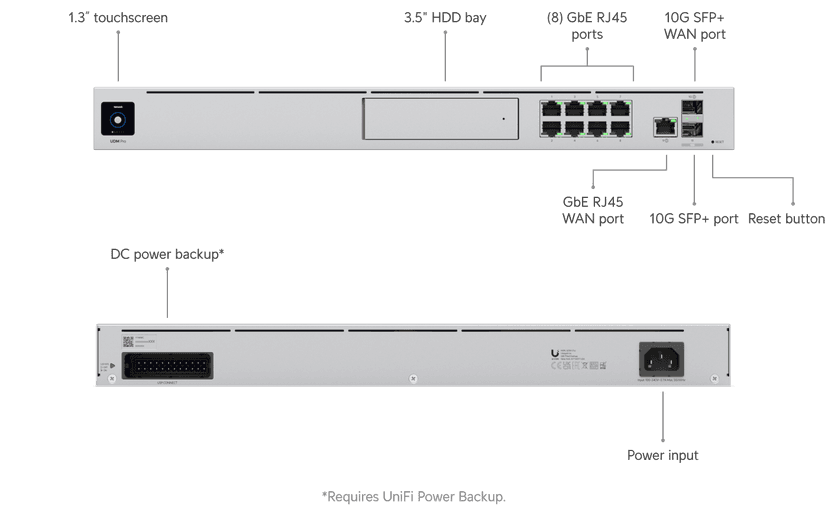
UDM-Pro
10G rackmount gateway & controller, 100+ devices / 1,000+ clients, 3.5 Gbps IPS routing
Equipment planning price $550 ↗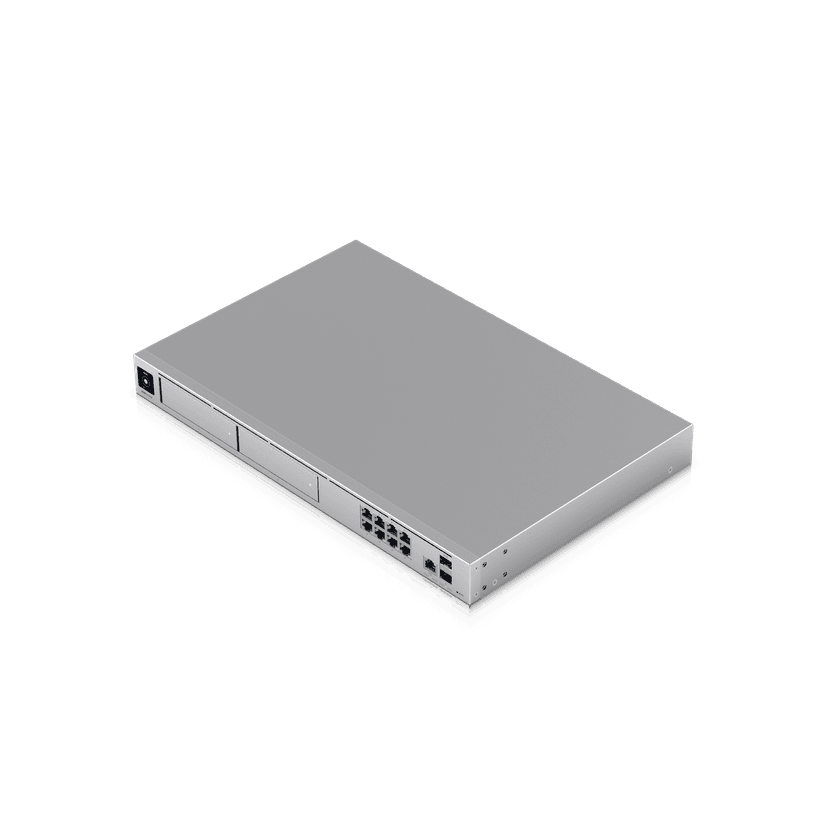
UDM-Pro-Max
10G gateway, 200+ devices / 2,000+ clients, 5 Gbps IPS routing, dual NVR-ready storage
Equipment planning price $875 ↗When this service makes sense
- New site or major network refresh
- Segmentation before connected-device growth
- Multi-building or multi-site backbone design
- Core remediation after repeated outages or undocumented changes
What we verify first
- Legacy device and protocol behavior
- Shared provider, power and physical-path dependencies
- Maintenance windows and remote-access continuity
- Throughput impact of security inspection and logging
Site contextSee where this work is usedView details
How site conditions change the design
Occupancy, operating hours, user activity, regulation, weather, construction, and access can change the design.



What people usually ask
Is a VLAN a security boundary?
A VLAN separates a broadcast domain, but effective security also requires controlled routing or filtering, protected management access, correct device assignment, logging and ongoing configuration discipline.
When is a redundant core useful?
When the outage consequence justifies the added equipment and operational complexity and the design also addresses shared power, uplink, physical-path and provider dependencies.
What should be tested after segmentation?
Test both required communications and prohibited paths, plus addressing, name resolution, authentication, management, monitoring and application-specific dependencies.
Standards and referencesReview the source materialView details
Sources used for this guide
These references inform the guide. The adopted code, engineer of record, authority having jurisdiction, manufacturer instructions, and signed agreement control the project.
Recommends purpose-based VLANs, ACLs, stateful inspection and DMZ constructs as layers in a broader segmentation strategy.
Open reference ↗IEEE 802.3 Working Group · reviewed 2026-08-20IEEE 802.3 EthernetOfficial working-group source for Ethernet physical-layer and media standards.
Open reference ↗Telecommunications Industry Association · reviewed 2026-08-20TIA-568: Commercial Building Telecommunications Cabling StandardsPrimary standards family for generic premises copper and optical-fiber cabling.
Open reference ↗BICSI · reviewed 2026-08-20Telecommunications Distribution Methods ManualICT design reference spanning spaces, backbone and horizontal distribution, testing, outside plant and data centers.
Open reference ↗